




There are so many advantages to using a double-table five-axis machining center
There are so many advantages to using a double-table five-axis machining center
Release date :2025-06-28 Browse times:377
The two-station five-axis machining center, as an indispensable high-end CNC machining center in modern manufacturing, provides strong support for the processing of complex parts with its unique design and outstanding performance. This type of machining center not only excels in terms of precision, efficiency and flexibility, but also plays a significant role in reducing production costs and enhancing product competitiveness. The following will explore in detail the various advantages of the double-station five-axis machining center.
1. High-precision processing
The double-station five-axis machining center adopts advanced numerical control technology and control systems, and is capable of achieving high-precision processing. Through the coordinated effect of the five degrees of freedom of motion, the processing tool can cut in any direction, thus avoiding the need for frequent fixture changes or repositioning of the workpiece during the processing. This design significantly reduces positioning errors and clamping errors, ensuring processing accuracy. Meanwhile, five-axis linkage machining can also achieve complex curved surface processing and irregular part processing, meeting the processing requirements of high-precision parts.
Double-table five-axis machining center
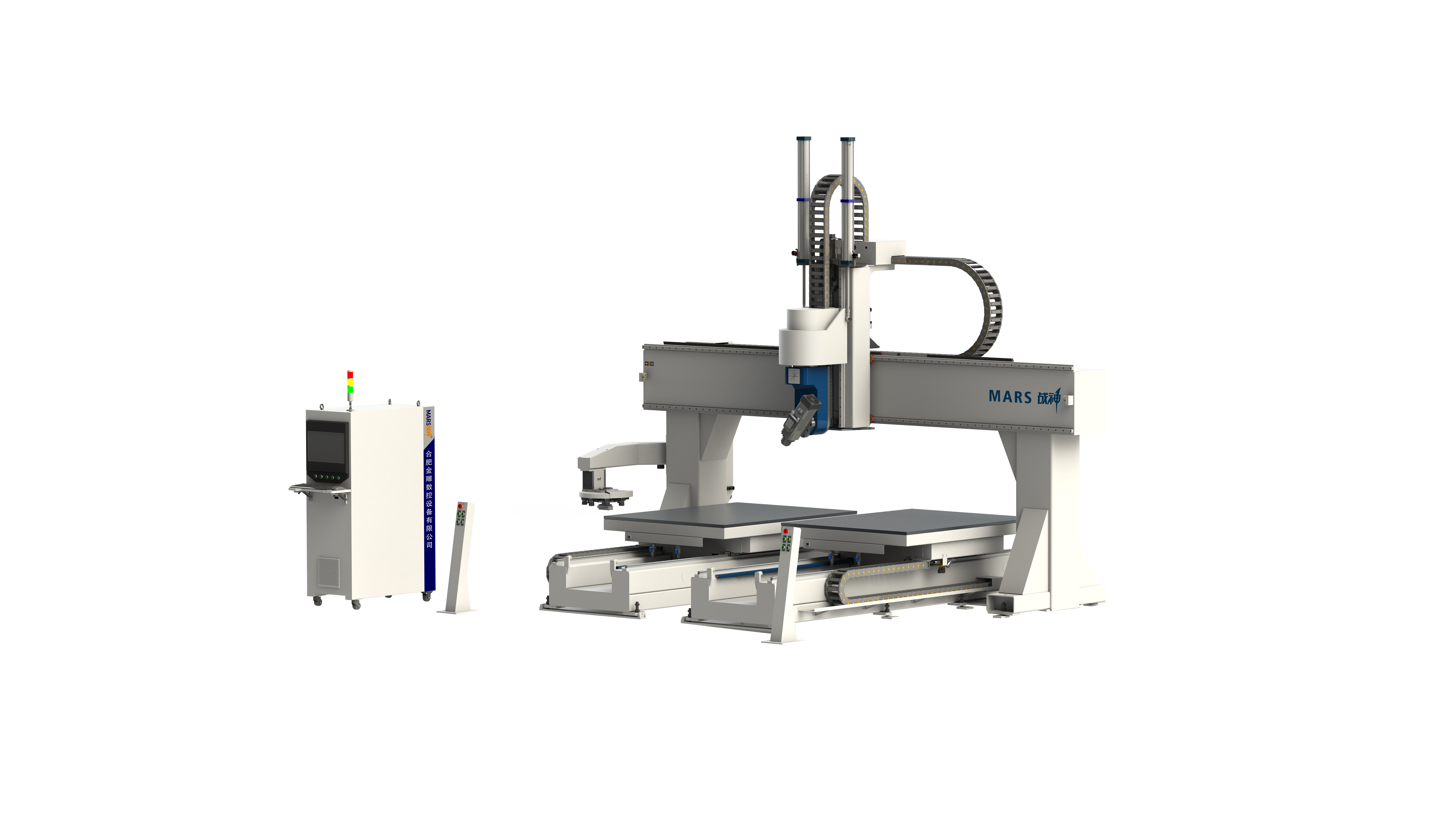
Second, high-efficiency production
The double-station five-axis machining center has two independent worktables. When one platform is processing, the other platform can perform loading and unloading operations, achieving non-stop cycle processing. This design significantly reduces the downtime for loading and unloading materials and enhances work efficiency. In addition, five-axis machining can optimize tool paths, reduce idle travel time, and further enhance processing efficiency. In the production of bulk orders, the dual-station five-axis machining center can quickly complete processing tasks, shorten the delivery cycle and meet customer demands.
Three. Wide adaptability
The two-station five-axis machining center has wide adaptability and can process various complex-shaped parts, including irregular parts and curved surface parts, etc. This type of machine tool is not only applicable to fields such as aviation, aerospace and military, but also widely used in industries like automobiles, molds and medical devices. The flexible processing capability of five-axis machining centers enables enterprises to respond more quickly to changes in market demand and seize market opportunities. Meanwhile, five-axis machining can also achieve multi-face processing with a single clamping, reducing the number of workpiece clamping times and tool changes, and further enhancing production efficiency.
Four. Reduce production costs
Although the initial investment cost of a two-station five-axis machining center is relatively high, it has reduced the overall production cost due to its improved processing accuracy and efficiency, reduced manual intervention and rework rate. In addition, five-axis machining can also reduce the consumption of fixtures and tools, further lowering production costs. In a highly competitive market environment, reducing production costs is the key for enterprises to enhance their competitiveness. The two-station five-axis machining center creates greater value for enterprises by enhancing production efficiency and reducing production costs.
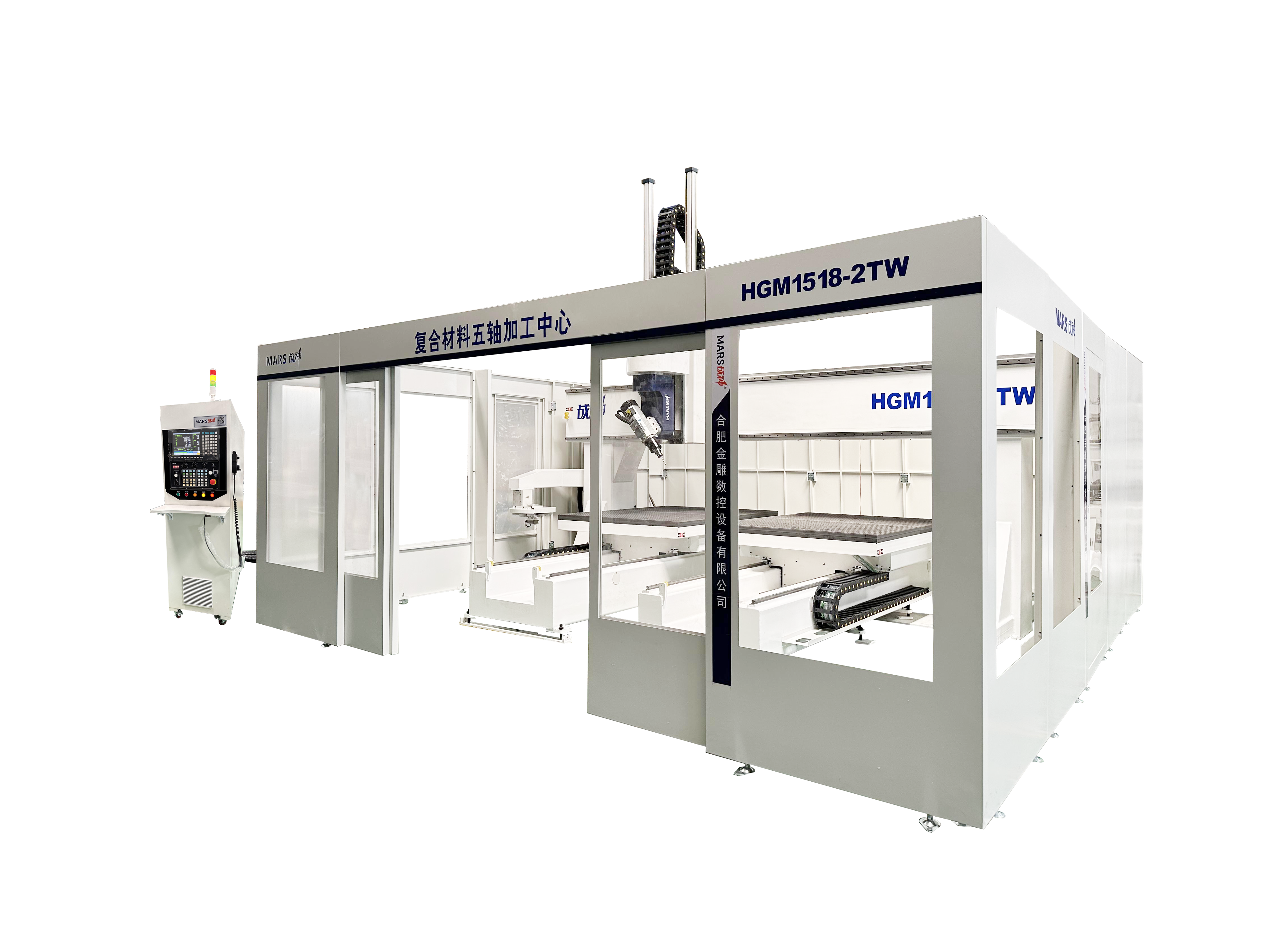
Five-axis machining center for cutting composite materials
V. Enhance product competitiveness
The dual-station five-axis machining center can achieve high-precision processing of complex-shaped parts, endowing the products with higher added value and market competitiveness. The parts processed by this type of machine tool feature high precision and stable quality, which can meet customers' demands for high-quality products. Meanwhile, the flexible processing capability of five-axis machining centers also enables enterprises to respond more quickly to changes in market demand and develop more new products that meet market needs. This ability to respond quickly to market changes is one of the important factors for enterprises to gain an advantage in competition.
Vi. Technological Advancement and Maintainability
The double-station five-axis machining center adopts advanced technology and design concepts, which enables the machine tool to perform outstandingly in terms of performance and stability. Meanwhile, the maintenance and upkeep costs of machine tools are relatively low, and they have a long service life. This technological advancement and maintainability enable the dual-station five-axis machining center to maintain stable performance over long-term use, creating greater value for enterprises.
Double-station five-axis machining center
In conclusion, the dual-station five-axis machining center has significant advantages in high-precision processing, high-efficiency production, wide adaptability, cost reduction in production, enhancement of product competitiveness, as well as technological advancement and maintainability. With the continuous development of the manufacturing industry and the constant progress of technology, dual-station five-axis machining centers will play an important role in more fields and create greater value for enterprises.
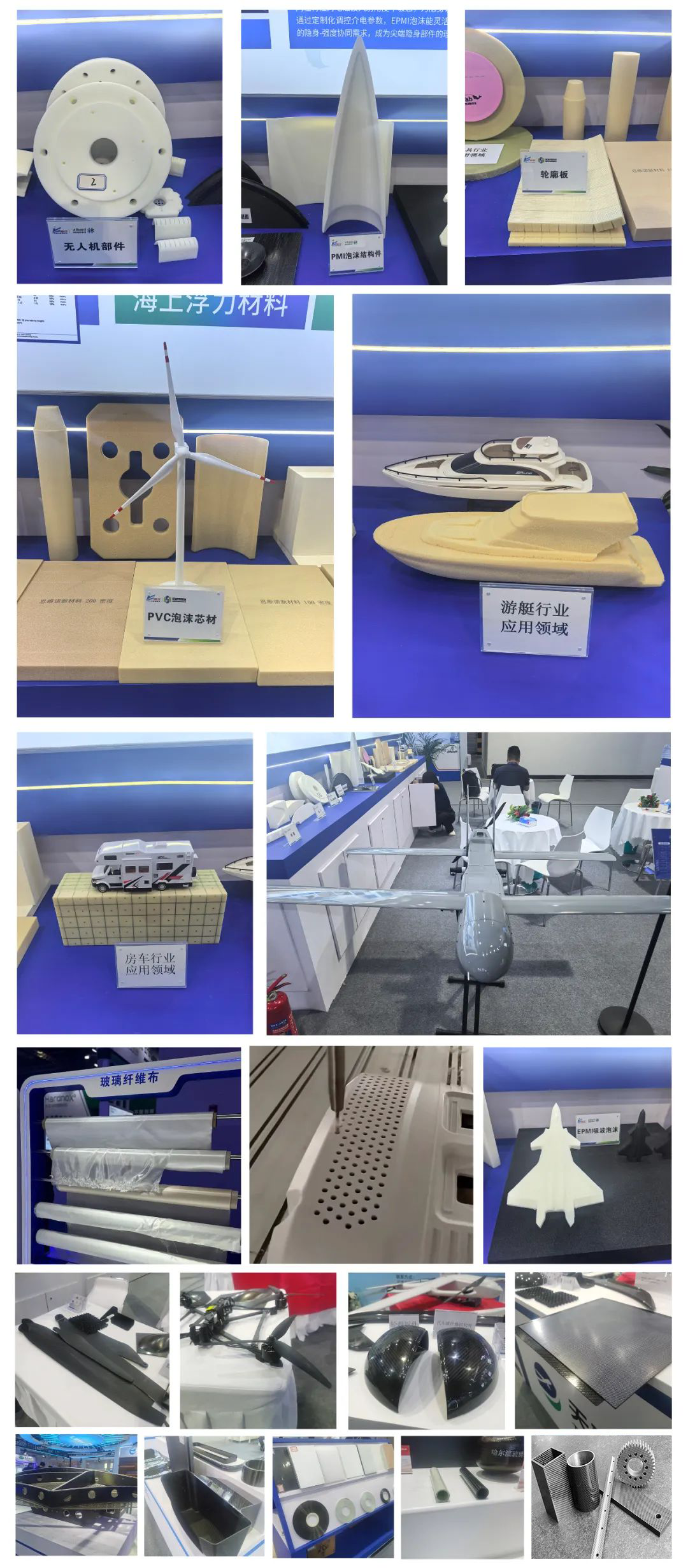
It is applicable to automotive interior parts, car models, ceramic sanitary ware, ships, yachts, aerospace chemicals, wind power generation, rail transit, solid wood furniture, three-dimensional handicrafts.
Bathroom fixtures, seats, cast wood molds, cast lost foam and other industries! FRP edge trimming, resin parts processing and three-dimensional processing of other solid carbonized parts.
In the teaching and experimental industry, chairs and other items that require three-dimensional processing
(