




Do you really know the secrets of composite material machining centers
Do you really know the secrets of composite material machining centers
Release date :2024-12-17 Browse times:529
Composite materials: These are materials composed of two or more different types of materials, combined through physical or chemical methods at the macroscopic (microscopic) level to form new materials with enhanced properties. The various materials complement each other's performance, creating a synergistic effect that makes the composite material's overall performance superior to its individual components, thus meeting diverse requirements.
The matrix materials of composite materials are divided into two major categories: metallic and non-metallic. Common metallic matrices include aluminum, magnesium, copper, titanium, and their alloys. Main non-metallic matrices are synthetic

Composite materials: These are materials composed of two or more different types of materials, combined through physical or chemical methods at the macroscopic (microscopic) level to form new materials with enhanced properties. The various materials complement each other's performance, creating a synergistic effect that makes the composite material's overall performance superior to its individual components, thus meeting diverse requirements.
The matrix materials of composite materials are divided into two major categories: metallic and non-metallic. Common metallic matrices include aluminum, magnesium, copper, titanium, and their alloys. Main non-metallic matrices are synthetic resins, rubber, ceramics, graphite, carbon, etc. Reinforcement materials primarily include glass fibers, carbon fibers, boron fibers, aramid fibers, silicon carbide fibers, asbestos fibers, whiskers, metal wires, and hard fine particles.
When processing composite materials, we need to perform precise machining based on the type of composite material.
Below is a brief introduction to some issues that machining centers should pay attention to when processing composite materials:
One: Types of composite materials processed by machining centers
Composite materials are classified by composition into metal-metal composites, non-metal-metal composites, and non-metal-non-metal composites. By structural characteristics, they are further divided into:
1. Fiber-reinforced composites. These are formed by placing various fiber reinforcements within the matrix material. Examples include fiber-reinforced plastics and fiber-reinforced metals.
2. Sandwich composites. These are composed of surface materials and core materials with different properties. Typically, the face sheets are strong and thin, while the core material is lightweight and has lower strength but certain stiffness and thickness. They are divided into solid sandwich and honeycomb sandwich types.
3. Particulate composites. Hard fine particles are uniformly distributed in the matrix, such as dispersion-strengthened alloys and metal ceramics.
4. Hybrid composites. These consist of two or more reinforcement phase materials mixed into one matrix phase material. Compared to ordinary single-reinforcement-phase composites, they show significantly improved impact strength, fatigue strength, and fracture toughness, and have special thermal expansion properties. They are categorized into intra-layer hybrid, inter-layer hybrid, sandwich hybrid, intra/inter-layer hybrid, and ultra-hybrid composites.
Two: Issues to be noted when machining centers process composite materials
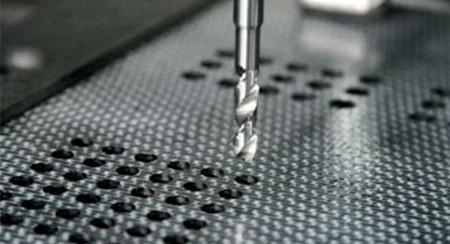
1. Carbon fiber composite materials have low interlaminar strength and are prone to delamination under cutting forces. Therefore, drilling or trimming should reduce axial force. Drilling requires high speed and small feed rate. Machining center speeds are generally 3000~6000 r/min, with a feed rate of 0.01~0.04 mm/r. Drill bits with three tips and two flutes or two tips and two flutes are preferable. Sharp cutting edges can first cut through the carbon fiber layers, and the two flutes repair the hole walls. Diamond-impregnated drill bits offer excellent sharpness and wear resistance. Drilling composite materials with titanium alloy laminates is challenging. Typically, solid carbide drill bits are used, with cutting parameters for titanium alloy drilling. Drilling starts from the titanium alloy side until穿透, and lubricant is added during drilling to prevent burning of the composite material.
2. Three new types of solid carbide composite material-specific end mills for machining centers have better cutting effects. They share common features: high rigidity, small spiral angle (even 0°), and specially designed double helical cutting edges, which effectively reduce axial cutting forces of the machining center and minimize delamination. Their machining efficiency and results are very good.
3. Composite material chips are powdery and pose a significant health hazard to humans. A high-power dust collector should be used to suction dust. Water cooling can also effectively reduce dust pollution.
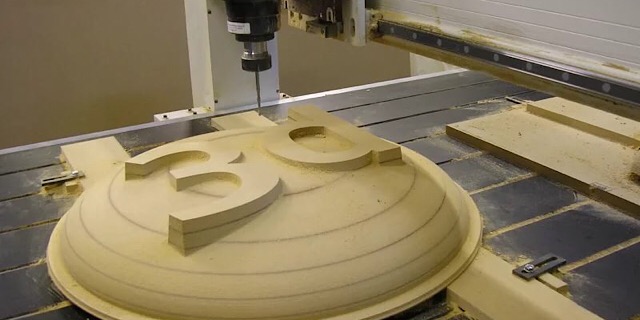
Composite Material Machining Center
Model: MARS 3013
Type: Four-axis composite material machining center
(This article is from the Internet. If it is not allowed to be reprinted, please contact our company for deletion.