




How does a five-axis machining center process parts
How does a five-axis machining center process parts
Release date :2025-05-27 Browse times:230
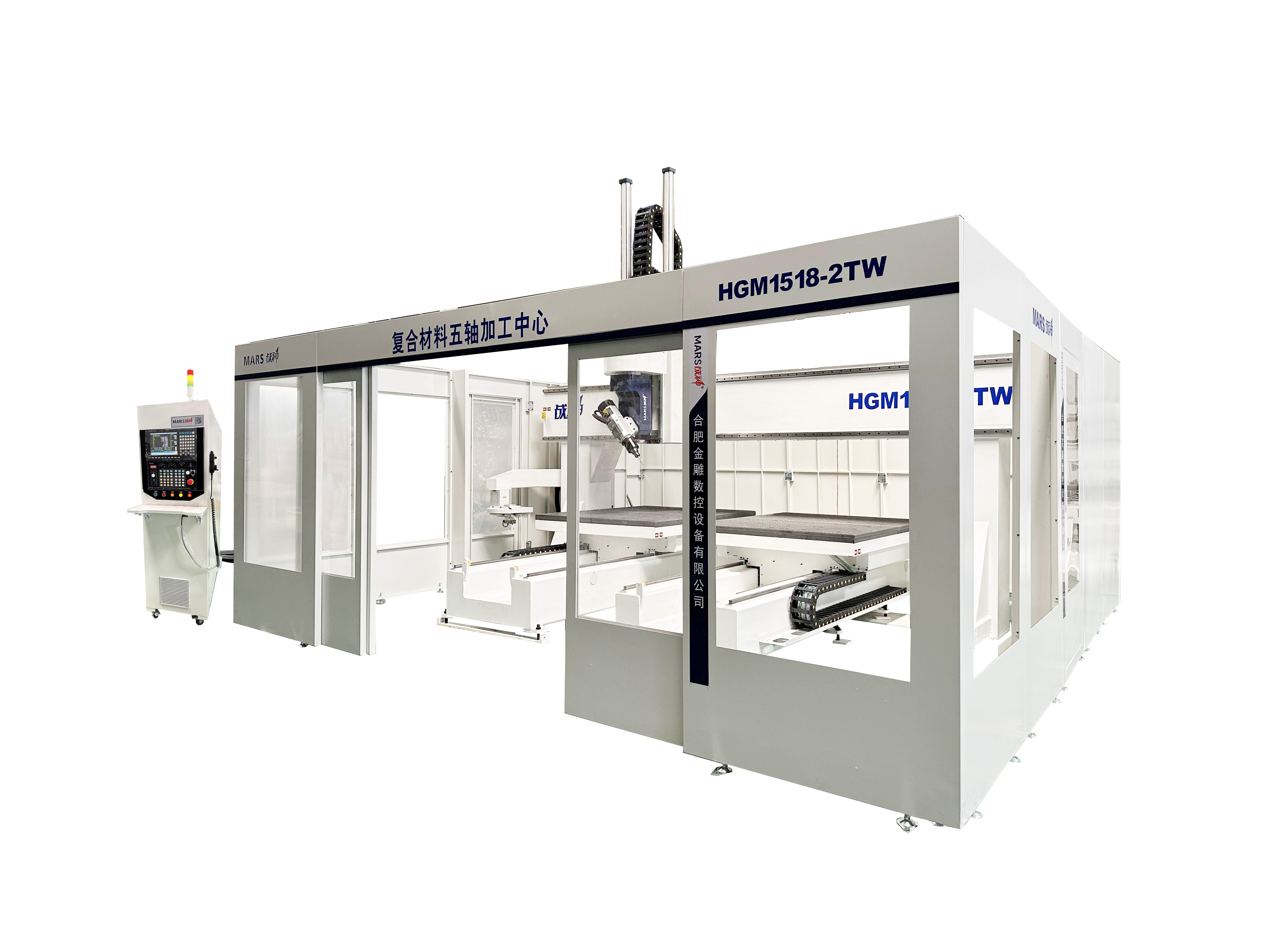
Five-axis machining centers are highly automated processing equipment and are often used in high-end manufacturing. Five-axis machining centers are suitable for manufacturing and processing free-form surface machine body parts, fan impellers, etc. We can find that the products suitable for processing by five-axis machining centers all have a relatively high degree of curved surfaces. Due to the feature that it is difficult to form and process them in one clamping, five-axis machine tools can process different sides of the product without changing its position on the machine tool, and improve the prism
The manufacturing and processing efficiency of shaped parts. The five-axis machining center has three moving axes, namely X, Y, and Z, and any two rotating axes. Compared with the traditional three-axis machining center, the five-axis linkage technology of the five-axis machining center enables the tool to be precisely positioned and operated in five degrees of freedom when manufacturing and processing products with relatively complex three-dimensional geometries. Many friends in various industries have a question when it comes to understanding five-axis machining centers. They think that five-axis machining centers are based on three-axis machining centers and add two rotary axes. These two rotating axes first stabilize the cutting tool in an inclined position, and then the feed axes X, Y, and Z are used for movement and processing. This type of manufacturing and processing method actually takes into account that the fourth and fifth axes are used to determine the direction of the tool at a stable position, rather than continuously running during the processing. Therefore, this is not true five-axis linkage technology. A 3+ 2-axis machining center can perform manufacturing operations that ordinary machining centers cannot, but it is not a true five-axis machining center either.
A true five-axis machining center has a tool point following function, which can ensure that the cutting point of the tool is in contact with the surface of the part without changing any basic parameters, avoiding the occurrence of cutting pits. During the overall path movement, the direction of the tool can be optimized, and at the same time, the tool moves in a straight line. In this way, it's all possible along the overall path
(文章来源于AI,仅供参考)